Femoroacetabular Impingement
Rheumatoid arthritis
Ankylosing spondylitis
Bone fracture
Developmental Dysplasia of Hip
Labral Injuries
Perthes’ diseases
Slipped capital femoral epiphysis
Irritable hip syndrome
When I evaluate patients with hip pain in Dhaka, I usually explain that “hip conditions” is a broad term. Many people say they have hip pain, but the real cause may come from the joint itself, the surrounding tendons or bursae, the lower back, or even a fracture after a fall. The hip is a deep ball-and-socket joint, so symptoms can appear in the groin, outer side of the hip, buttock, or sometimes even the thigh and knee.[1][2]
In my practice, I often see two problems at the same time. First, patients delay evaluation because they assume hip pain is just muscle strain or age-related weakness. Second, many people treat all hip pain as the same condition. That is not accurate. Hip osteoarthritis, bursitis, femoroacetabular impingement, osteonecrosis, fractures, muscle strains, and labral problems do not behave the same way and should not be managed in the same way.[1][2][3]
One important point I want Bangladeshi patients to understand is that the location of pain, the speed of onset, the age of the patient, and the history of injury all give important clues. A person with sudden pain after a fall needs a very different approach from someone with slowly progressive stiffness while walking.
What the Hip Joint Does
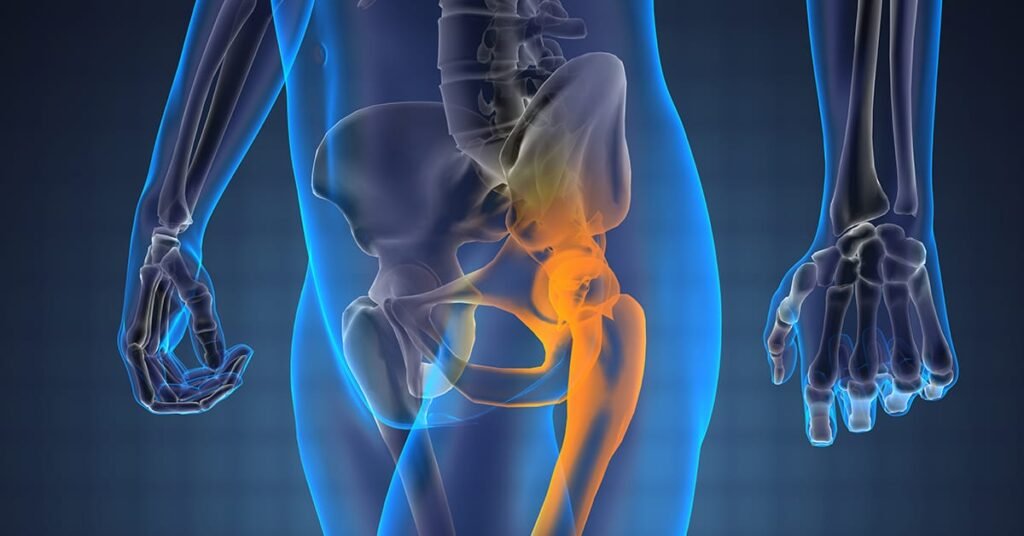
The hip is one of the largest weight-bearing joints in the body. The ball is the femoral head, and the socket is part of the pelvis called the acetabulum. This design allows stability while still permitting walking, sitting, bending, climbing stairs, and changing direction.[1][2]
Because the hip carries body weight with every step, even a small problem can affect daily life significantly. In Bangladesh, I often see this interfere with:
- walking on uneven roads
- using stairs several times a day
- sitting on low surfaces
- prayer-related movements
- squatting, floor sitting, or rising from the floor
- commuting in rickshaws, bikes, or crowded vehicles
That is why hip problems can feel much more disabling than patients initially expect.
Common Symptoms of Hip Conditions
Different hip conditions produce different symptom patterns, but several complaints are common:
- groin pain
- pain on the outer side of the hip
- buttock pain
- stiffness after sitting or resting
- difficulty walking
- pain while climbing stairs
- limping
- reduced ability to bend, rotate, or spread the leg
- clicking, catching, or snapping sensations
- night pain, especially when lying on one side
Hip pain that starts gradually often points toward arthritis, impingement, tendon-related problems, or bursitis. Sudden severe pain after trauma raises concern for fracture, dislocation, or acute soft-tissue injury.[1][4][6]
Common Hip Conditions I See Most Often
Osteoarthritis
Hip osteoarthritis is one of the most common chronic hip conditions. In this problem, the cartilage inside the joint gradually wears down, causing pain, stiffness, and reduced movement. Patients often describe pain in the groin, stiffness after rest, and increasing difficulty with walking, bending, or getting up from a chair.[2]
This is more common with age, previous joint injury, abnormal hip structure, obesity, or long-term mechanical stress. Some patients develop symptoms slowly over years, while others notice a more obvious decline over a shorter period.[2][7]
Hip bursitis
Hip bursitis often causes pain on the outer side of the hip. The discomfort may worsen while lying on that side, climbing stairs, or walking for longer distances. Some patients think they have joint arthritis, but the pain location and examination findings suggest inflammation of a bursa instead.[4]
In my practice, I often see this in people who have gait imbalance, overuse, weak hip muscles, or altered walking mechanics due to knee pain or back pain.
Femoroacetabular Impingement
Femoroacetabular impingement, often called FAI, happens when the shape of the femoral head or acetabulum causes abnormal contact during movement. Over time, this can injure the labrum and cartilage, and in some patients it may contribute to earlier arthritis.[3]
Patients often describe groin pain, pain while sitting for long periods, reduced flexibility, or discomfort during twisting, squatting, or sports activity. Younger active adults are commonly affected.
Osteonecrosis of the hip
Osteonecrosis, also called avascular necrosis, develops when the blood supply to the femoral head is disrupted. This can eventually lead to collapse of the bone and severe arthritis if not recognized and managed in time.[5]
Pain may begin as a deep ache in the groin, buttock, or thigh and become worse with weight bearing. Some patients have risk factors such as steroid use, heavy alcohol exposure, previous trauma, or certain blood or inflammatory disorders.[5]
Rheumatoid arthritis
Rheumatoid arthritis is an autoimmune inflammatory disease that can affect the hip, although many patients first notice symptoms in smaller joints. When the hip becomes involved, patients may develop deep groin pain, morning stiffness, difficulty walking, and progressive limitation in movement. I become more concerned about inflammatory arthritis when hip symptoms happen along with swelling or stiffness in multiple joints, fatigue, or a known rheumatologic diagnosis.[8][9]
The key difference from ordinary wear-and-tear arthritis is that inflammatory arthritis can damage the joint through immune-driven inflammation rather than just long-term mechanical degeneration. These patients often need coordinated care with rheumatology as well as orthopedic follow-up when structural joint damage becomes significant.
Ankylosing spondylitis
Ankylosing spondylitis is another inflammatory condition that can affect the hips, especially in younger adults with chronic back stiffness, morning pain, and gradually reduced mobility.[9] Hip involvement can become an important reason for limping, loss of flexibility, and reduced walking tolerance.
In Bangladesh, this can be missed for some time because patients may assume the problem is only from the lower back. If hip stiffness is developing along with prolonged morning stiffness or spinal symptoms, further evaluation is important.
Bone fracture
Hip fracture is an urgent orthopedic problem, especially in older adults after a fall. In younger people, it is more often related to high-energy trauma such as road traffic accidents.[6]
Patients usually have sudden pain, inability to bear weight, and marked difficulty moving the leg. In Bangladesh, this should never be dismissed as a simple sprain after a fall, especially in an elderly patient who suddenly cannot stand.
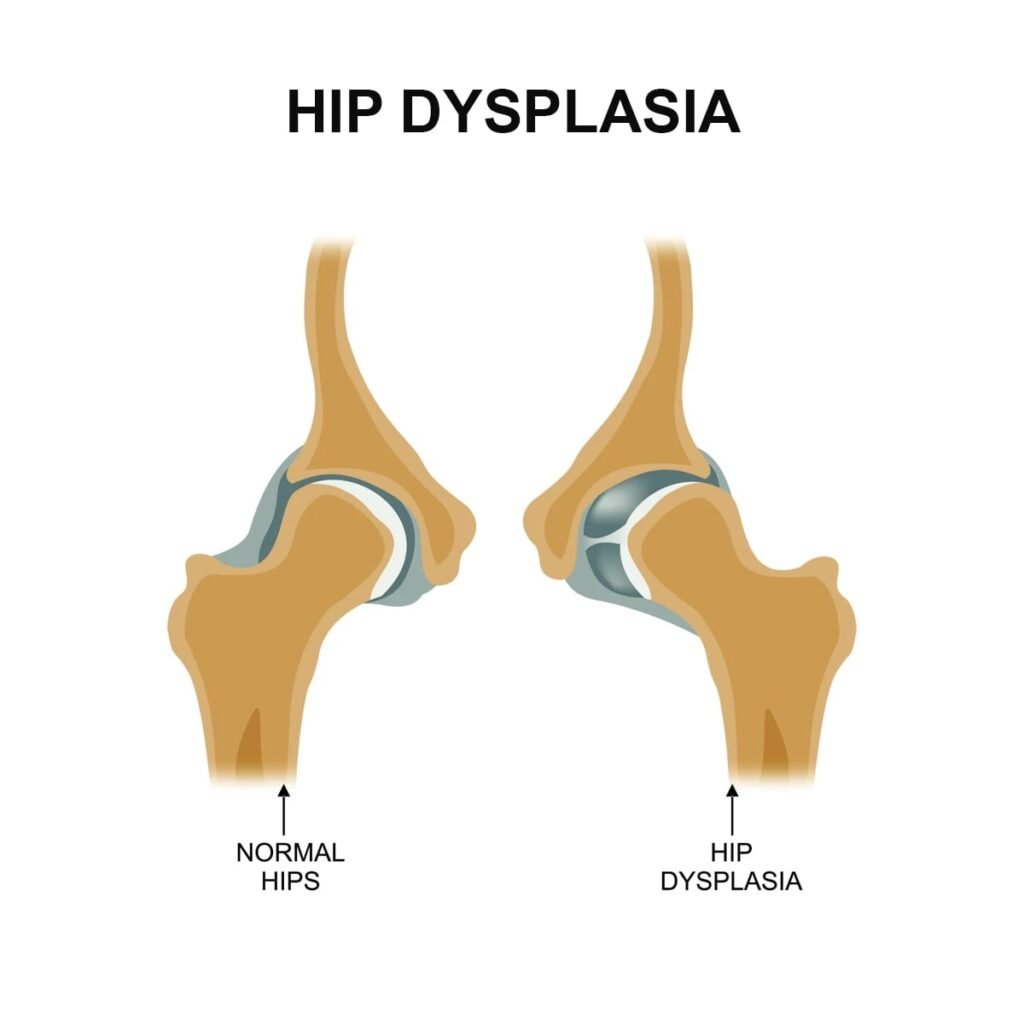
Developmental Dysplasia of Hip
Developmental dysplasia of the hip refers to abnormal formation or instability of the hip joint that begins early in life. Some cases are diagnosed in childhood, while milder cases may present later with hip pain, limp, reduced range of motion, or early degenerative change.[1][2]
When I assess younger adults with unexplained hip pain or early arthritis, I keep structural causes such as dysplasia in mind because long-term abnormal loading of the joint can affect the labrum and cartilage.
Labral Injuries
The labrum is a ring of tissue around the socket that helps seal and stabilize the hip joint. Labral injuries may cause groin pain, clicking, catching, pain with twisting, or discomfort during sports and long sitting. They are often associated with femoroacetabular impingement or structural abnormality.[3]