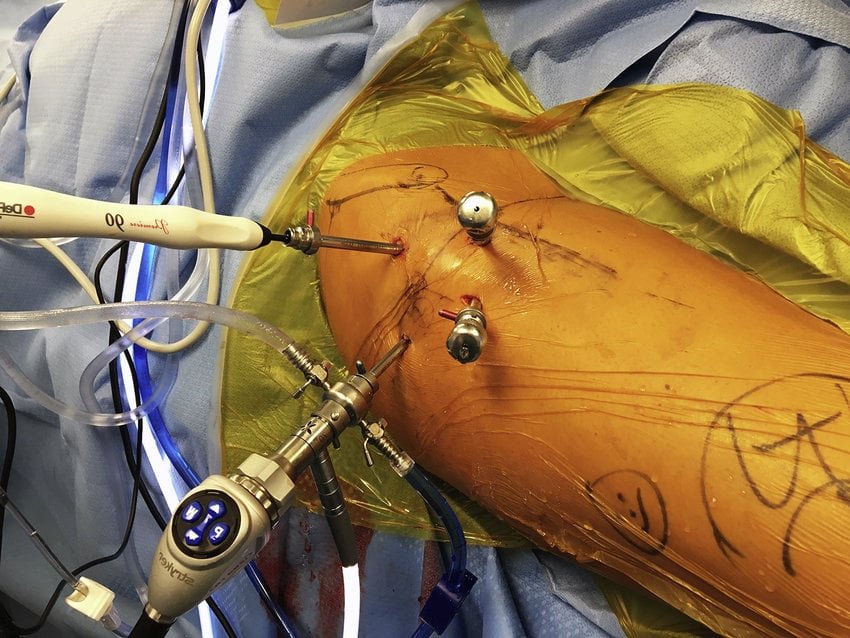
In my practice, I often see Bangladeshi patients with hip pain who assume the only surgical answer is hip replacement. That is not always true. In selected patients, especially those with early structural problems of the hip rather than end-stage arthritis, hip preservation may be the more appropriate direction. [1][2]
Hip preservation means identifying and treating problems in a way that aims to protect the natural hip joint for as long as reasonably possible. The goal is not simply to reduce pain for a few weeks. The goal is to understand why the hip is becoming painful, unstable, stiff, or mechanically overloaded, and then choose treatment that may reduce damage progression and maintain function. [2][3]
One important point I want Bangladeshi patients to understand is that hip preservation is not one single operation. It is a treatment philosophy. Sometimes it involves exercise therapy, activity modification, and image-guided injections. Sometimes it involves hip arthroscopy or another corrective procedure. The right plan depends on the actual structural problem in the hip. [1][2]
What hip preservation means
Hip preservation focuses on keeping the patient’s own hip joint when that is still realistic and clinically sound. This usually applies to patients with pre-arthritic or early arthritic hip conditions rather than advanced joint destruction. [2][4]
Problems that often fall under hip preservation
- femoroacetabular impingement, also called FAI
- labral tears
- early cartilage damage
- selected forms of hip dysplasia
- femoral torsion abnormalities
- mechanical hip pain in younger or active adults without advanced arthritis [1][2][3]
The basic principle is to correct the mechanical cause of pain or overload before the hip deteriorates further. Not every painful hip can be preserved, but when the disease is recognized early enough, preservation may help delay or avoid larger reconstructive surgery. [2][3]
Who may benefit from a hip preservation approach
I usually think about hip preservation in patients who are still relatively young or active, who have ongoing hip pain, and whose imaging shows structural causes that may be treatable before the joint becomes severely arthritic. [1][2]
Patients I commonly evaluate for preservation
- adults with groin pain during sitting, squatting, or twisting
- athletes or active adults with hip pinching or loss of motion
- patients with labral injury linked to a structural problem
- people with hip pain that keeps returning despite rest and medicines
- patients whose X-rays do not yet show advanced end-stage arthritis [1][3]
In Bangladesh, this matters because many patients continue physically demanding work, frequent stair use, prolonged sitting during commuting, and family responsibilities even when hip pain is growing. If the joint damage is still at a stage where preservation is possible, it is worth considering before jumping directly to replacement thinking. [2][4]
Conditions I assess before discussing hip preservation surgery
Hip preservation starts with correct diagnosis. I do not recommend surgery based on pain alone.
Femoroacetabular impingement
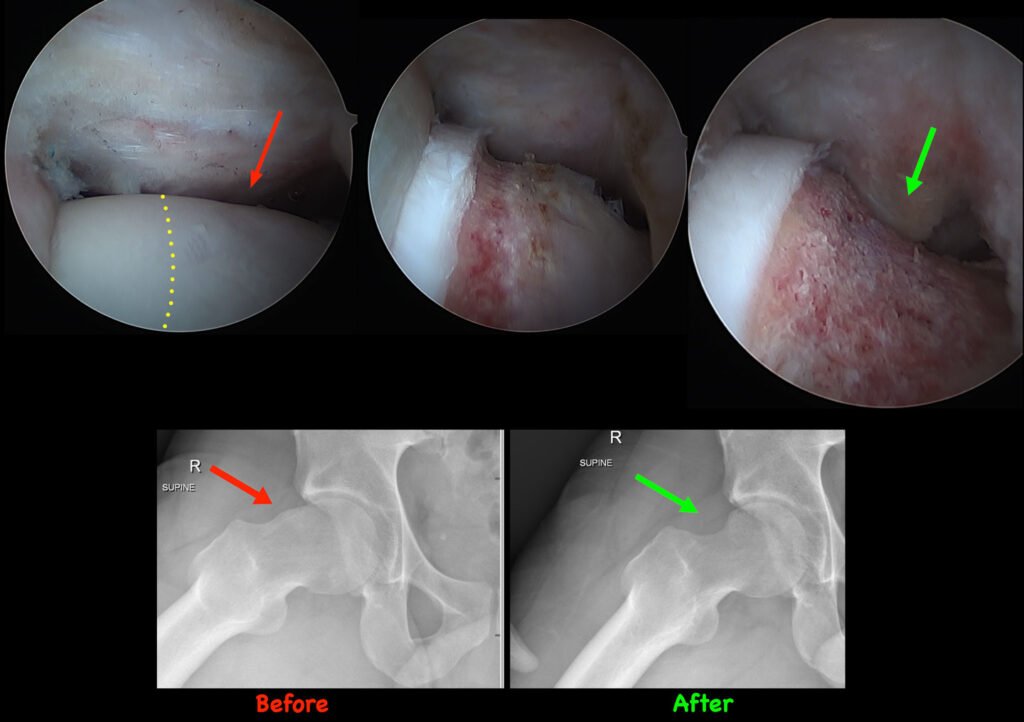
FAI happens when the ball and socket of the hip do not move against each other smoothly because of abnormal bone shape. This can damage the labrum and cartilage over time and may lead to persistent groin pain, stiffness, clicking, and reduced movement. [1][5]
Labral injury
The labrum is the ring of tissue around the hip socket. A torn labrum can cause pain, catching, clicking, and a sense that the hip is not moving properly. In many patients, the labral tear is not the whole story. The more important question is why the labrum tore in the first place. [1][2]
Hip dysplasia or undercoverage
Some hips have structural undercoverage of the femoral head, which can create instability and overload the labrum and cartilage. Hip preservation in these cases is not just about treating the torn tissue. It is about understanding whether the hip is fundamentally unstable or poorly covered. [2][6]
Femoral torsion abnormalities
Rotational problems in the femur can also affect hip mechanics. Recent hip-preservation principles emphasize that focusing only on the most obvious finding, such as a labral tear, can miss the real combined cause of symptoms. [2]
Symptoms that make me think beyond simple muscle pain
Hip pain is often misunderstood. Many patients first think the pain is from the back, the groin muscles, or simple overuse.
Symptoms that deserve proper hip evaluation
- deep groin pain
- pain with sitting for long periods
- pinching during squatting or bending
- pain while getting in and out of a car
- stiffness or reduced hip rotation
- clicking, catching, or locking sensations
- pain that returns repeatedly with sport or physical work [1][5]
I usually explain to patients that recurrent mechanical pain with the same movements is a clue. If the hip hurts every time you flex, rotate, squat, or sit for too long, we need to think about the structure of the joint, not only temporary inflammation.
How I evaluate a patient for hip preservation
Proper evaluation is the foundation of hip preservation. In my practice, I combine the patient’s story, physical examination, and imaging findings before discussing treatment options. [1][2]
History and symptom pattern
I want to know:
- exactly where the pain is felt
- what movements trigger it
- whether there is stiffness, snapping, or catching
- how the problem affects work, travel, exercise, and family routine
- whether symptoms are worsening or staying stable
Physical examination
I assess gait, hip range of motion, impingement-type pain during flexion and rotation, muscle strength, and signs that the pain may actually be coming from the lower back, pelvis, or surrounding tendons instead of the hip joint itself. [1][5]
Imaging
X-rays are usually the first step because they help show bone shape, coverage, and arthritic change. MRI can help when I need more detail about the labrum, cartilage, or surrounding soft tissues. In selected cases, additional imaging may be needed for detailed planning. [1][2]
This is where many treatment decisions become clearer. If the hip already has advanced joint-space loss and widespread arthritis, preservation may no longer be the right path. If the joint is still relatively preserved but the mechanics are wrong, then preservation becomes much more relevant. [2][4]